Silent basketballs and foam soccer balls: practising indoors without the noise
A foam ball is quieter than an inflated one. What ours are made of, which size to get by age, and what they are and are not good for.
On this page
A silent basketball is worth it if the thing stopping practice at home is noise: a flat or apartment with neighbours below, someone asleep in the next room, a hallway that echoes. It is a foam ball, not a quieter version of a real one, so it is good for ball-handling and footwork and poor at pretending to be the ball you play with. Which size to buy is below.
What the balls are
We sell two foam balls for indoor practice, and one small rubber ball that belongs in the same conversation.
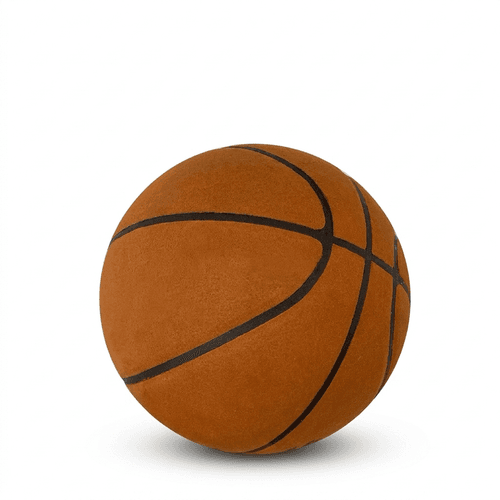
- The silent foam basketball is a one-piece, airless ball of EVA foam with a grooved surface like a basketball's. It needs no pump. It comes in one size, size 7, which is 29.5 in (about 75 cm) around, in orange.
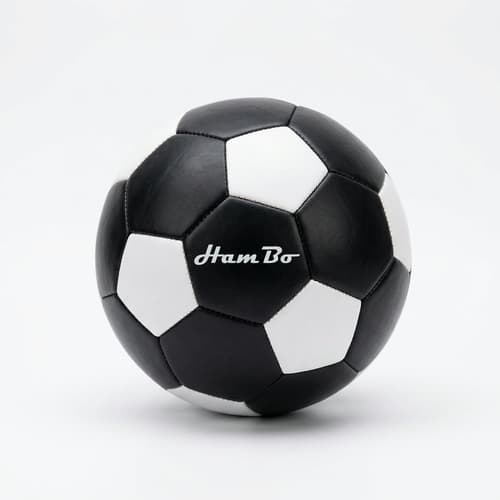
- The silent soccer ball is PU foam with a soft-touch surface, in the usual soccer ball shape. It comes in sizes 3, 5 and 7, in black.
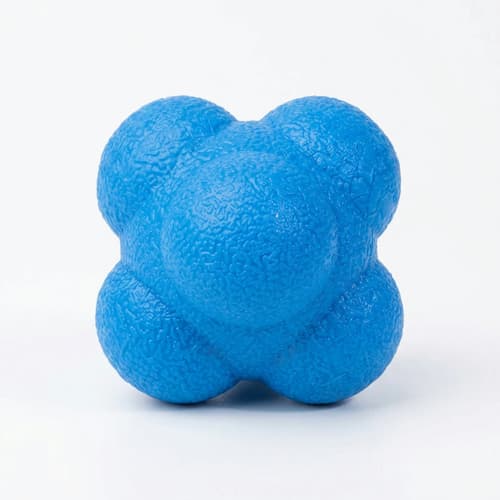
- The reaction training ball is rubber, about 6 to 7 cm across (roughly 2.5 in), with a multi-sided shape so that it bounces off at angles you cannot predict.
How quiet is quiet
Neither foam ball's page gives a decibel figure, and we are not going to invent one. The basketball's page says the foam makes dribbling quieter. The soccer ball's calls it low-noise, and says the soft foam reduces the impact on surfaces. Read that as quieter than an inflated ball, not silent. We have not measured either one.
The reaction ball is rubber, not foam, so it is not the quiet one. It is here because it is a drill ball you can use alone.
Which size
Basketball
The NBA and USA Basketball's youth guidelines recommend smaller balls for younger players: size 5 (27.5 in around) for ages 7 to 8, and size 6 (28.5 in) for ages 9 to 11, because a ball in proportion to a child's hands is easier to control. Our silent basketball comes only in size 7, at 29.5 in, which is bigger than both. A seven-year-old can still bounce it around the hallway, but it is not the size the guidelines would pick for them. For players aged 12 to 14 and in grades 9 to 12, the same guidelines recommend size 7 for boys and size 6 for girls, so ours suits boys of those ages best. For girls it is a size above the one the guidelines recommend.
Soccer ball
Youth soccer uses three ball sizes. AYSO, for example, uses size 3 up to its 8U division, size 4 for 10U and 12U, and size 5 from 14U up. Our foam ball comes in sizes 3, 5 and 7. The page gives no measurements, so treat the numbers as a guide:
- Size 3 for children in 8U and younger.
- Size 5 for 14U and up. It is the size older players use in matches.
- For 10U and 12U, who play with a size 4, there is no exact match. Take the 3 for a smaller player, or the 5 they will move up to.
- Size 7 is not a size on AYSO's chart at all; the ball's own page calls it a large variant. Unless you specifically want the biggest ball, choose the 3 or the 5.
What you can practise with a foam ball
The basketball's page calls it lightweight and the soccer ball's describes a controlled bounce. Neither page compares the ball with an inflated one, so we would not promise that it plays the same. That is why we suggest them for work with the ball close to you, rather than anything where it has to travel.
Good indoors with the foam basketball:
- Stationary dribbling with each hand, low and then high
- Crossovers, between the legs and behind the back
- Figure eights around and through the legs
- Dribbling while sitting or kneeling, which takes the feet out of it and leaves only the hand
Good indoors with the foam soccer ball:
- Toe taps on top of the ball, alternating feet
- Sole rolls across the body and back
- Inside-outside touches with one foot, then the other
- Short passes against a wall or the bottom of a sofa, receiving with the sole
Leave these for the real ball, outside or at the court: shooting on a proper hoop, long passing, striking the ball hard. A foam ball will not show you how an inflated one flies, and those are skills you build with the ball you play with.
The reaction ball
The reaction ball does one thing. Throw it at a wall or drop it on a hard floor, and its multi-sided shape sends it off in a direction you cannot call in advance, so you have to move to catch it. It works on your own, and at 6 to 7 cm it is easy to keep in a kit bag. It is not a quiet ball, so use it against a wall in a garage or outdoors rather than in a flat with neighbours below.
On wet evenings
For children, the CDC's guidance is 60 minutes or more of moderate-to-vigorous activity every day for ages 6 to 17, with most of it made up of activities such as walking, running, or anything that makes their hearts beat faster. On a wet evening a ball that can be used indoors keeps a child moving. Moderate activity is the kind where their heart beats faster and they breathe harder than at rest, so only the minutes where a drill does that count towards the 60.
House rules
A few things help. Clear the space of anything breakable. Keep the balls away from sharp edges; both foam balls' pages warn against sharp objects. Wipe them with a damp cloth when they get grubby. The basketball's page also says to keep it out of prolonged direct sunlight.
Is it worth it?
If noise is the only thing between a player and a few minutes of ball-handling on a weeknight, yes: the foam ball lets that practice happen on nights it otherwise would not. If the aim is shooting on a hoop, or practising with the exact ball you play with, use that ball at a court or a park instead.
All three are in the Train aisle.
Sources
- NBA.com: NBA, USA Basketball announce age-appropriate rules and standards for youth basketball competitions
- NBA / USA Basketball: Youth Basketball Guidelines, ages 12-14
- NBA / USA Basketball: Youth Basketball Guidelines, grades 9-12
- AYSO: Size of ball and field by age division
- CDC: Child activity, an overview
About this guide. We sell the products named here, and we have tried to say plainly where they are not the right choice. Product details come from each product’s own page. Health and safety points follow the sources above. They are general information, not medical advice.