Yoga mat thickness: 3mm, 4mm or 6mm, and what else you need at home
Thinner is firmer underfoot, thicker is kinder to knees, and 4 mm sits between the two. Then the three small things that make floor work at home easier.
On this page
Pick a yoga mat's thickness by what you do on it and the floor it goes on. A thin mat, around 3 mm, is firm and keeps you close to the floor, which suits standing poses and balance work. A thick one, around 6 mm, has more give, which suits kneeling, lying down and mat pilates, especially on a hard floor. At 4 mm you get the compromise, if you do a bit of both. Our yoga mat comes in all three.
3 mm, 4 mm or 6 mm
| 3 mm | 4 mm | 6 mm | |
|---|---|---|---|
| Roughly | 1/8 in | 5/32 in | 1/4 in |
| Feels | Firm; you feel the floor | Some cushion, still firm | Soft, with the most give |
| Best for | Standing and balance work; carpet | A mix of everything | Kneeling and lying work; hard floors |
| Trade-off | Less between your knees and the floor | Neither the firmest nor the softest | More give under one-legged balances; bulkier rolled up |
By what you do on it:
- Flowing classes with a lot of standing work: 3 or 4 mm.
- Mat pilates and stretching, mostly lying or kneeling: 6 mm, or 4 mm with knee pads.
- A mix of both, on a hard floor: 4 mm with knee pads, or 6 mm.
- A mat that travels to class: the thinnest one you are comfortable on, since it rolls up smallest.
Two things shift the choice:
- The floor. On tiles, timber or concrete, a thicker mat does more of the work. On carpet, which already gives, a 3 or 4 mm mat is usually enough, and a thick mat on thick carpet can feel unsteady underfoot.
- Your knees. If kneeling is the only thing that is uncomfortable on a thinner mat, you do not need a thick mat for everything. A pair of knee pads adds cushioning under the knees for that one problem and leaves the rest of the mat as firm as it was. More on those below.
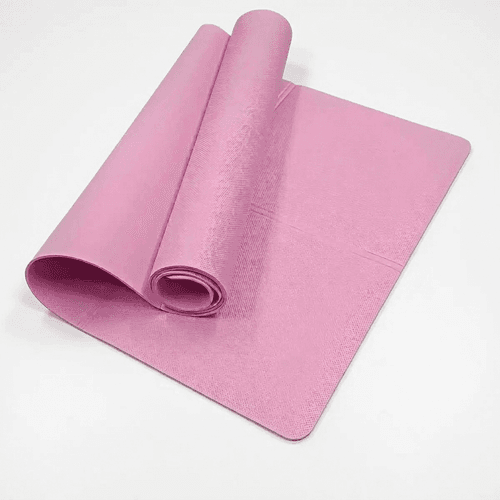
About the mat itself: it is an exercise mat in a foam-style material, with a textured, non-slip surface and rounded corners, and it comes in pink. Its page gives the thickness but not the length or width, only that it is a full-length mat, so if you are tall and need a particular length, ask us before ordering. Wipe it with a soft damp cloth after use, and let it dry fully before rolling it up.
What else you need at home
Very little. A mat and some clear floor cover most yoga and pilates. The three things below each solve a specific problem, and it is worth knowing which problem you have before buying any of them.
Knee pads, for hard floors and kneeling work
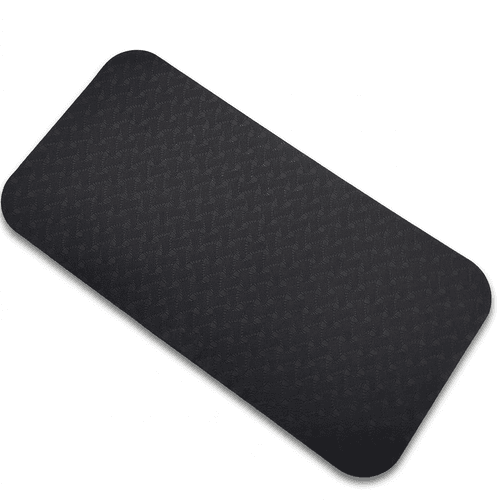
Our yoga knee pads are a pair of TPE (thermoplastic elastomer) pads with a textured, non-slip surface. The page lists knees, elbows, hands and forearms, so put one under whichever of those meets the floor, for example under a knee in a low lunge or on all fours. They come in five colours and wipe clean with a damp cloth. With a pair of these, you may not need the 6 mm mat at all.
Grip socks, for studio floors and barre
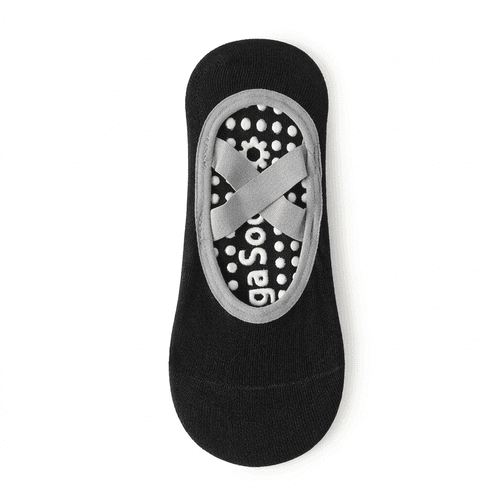
The grip yoga socks are low-cut, in cotton terry, with a silicone grip pattern on the sole and an elastic top band. Their page lists yoga, pilates, barre, dance and stretching. They come in one size range, EUR 35–40 (US 4.5–8.5), so check your shoe size falls inside it before ordering. There are six colours to choose from, and they machine wash cold with similar colours.
A resistance band, for strength work
The UK's National Health Service (NHS) counts yoga, pilates and working with resistance bands among the activities that strengthen muscles, and recommends that adults aged 19 to 64 do strengthening work that uses all the major muscle groups on at least two days a week. For the legs and hips, a fabric loop band is the simplest thing to add to a mat.
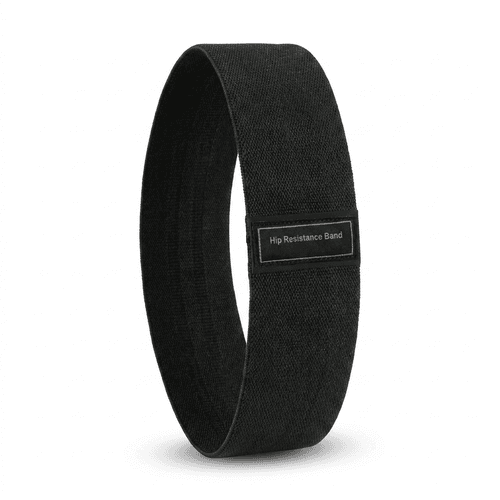
Our fabric resistance hip bands are closed loops of woven polyester fabric with a reinforced elastic core. Each is sold singly, in light, medium or heavy, and in black, light grey or dark grey. The page lists squats, lunges and glute bridges, and says the woven fabric is there to reduce rolling and pinching.
Which strength? The NHS's guidance for strength exercises is to do them to the point where you need a short rest before repeating the movement. Pick the light, medium or heavy band that gets you there, and go up a level when it stops doing that.
The bands' page lists a "latex elastic blend" among the materials and does not say whether that is natural rubber latex. If you are allergic to latex, treat it as though it is: the American College of Allergy, Asthma and Immunology advises people with a latex allergy to avoid direct contact with products that contain it.
The NHS also suggests speaking to a doctor first if you have not exercised for some time, or if you have a medical condition or concern.
What you can skip at first
Yoga blocks and straps come up in some classes. You can start without either and buy them when a class you follow asks for them. We do not sell either.
A home kit, in order
- A mat in the thickness that suits your floor and what you do on it
- Knee pads, if kneeling on a thinner mat is the problem
- Grip socks, if you slide on your floor or your class asks for them
- A band, when bodyweight work stops being enough of a challenge
The mat and the bands are in the Train aisle, the knee pads in Recover and the socks in Wear.
Sources
About this guide. We sell the products named here, and we have tried to say plainly where they are not the right choice. Product details come from each product’s own page. Health and safety points follow the sources above. They are general information, not medical advice.